Anime vs Anime Combat, Ranked, and Tournament
Turn pack luck into wins—neutral fundamentals, mode choice, and post-October balance awareness.
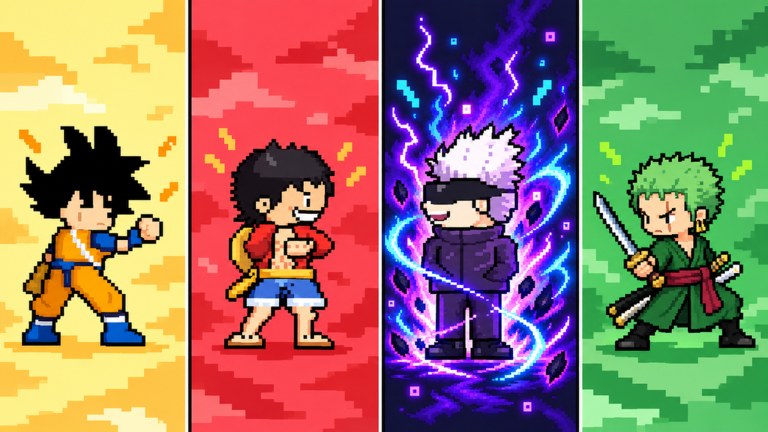
Collection gets you into the lobby; combat decides whether Anime vs Anime feels fair. This guide focuses on duel habits across 1v1, 2v2, Ranked, and Tournament, with notes on bot scaling, nerfs, and how to review sets. Watch the embedded gameplay example for pacing inspiration, then lab your own confirms in Training. For inputs, see Controls; for onboarding, see Getting Started.
Mindset before the first Ranked queue
- Short sets beat marathon tilt. Play three to five games, note one mistake theme, reset.
- Ranked measures decisions under pressure; Auto Fight measures something else entirely (Scripts Hub).
- Your tier list target matters less than clean confirms on a fighter you own.
- Beta balance (early access since ~27 September 2026) means yesterday’s infinite may be today’s trap—read Updates.
Neutral fundamentals that transfer across the roster
Regardless of whether you play Rimuru or a B-tier comfort pick:
- Respect space — many anime kits win by baiting jumps; walk and whiff punish instead of autopilot aerials.
- Single mission per round — land one practiced route, not five unfinished supers.
- Defense after offense — stop mashing when your string ends; block and breathe.
- Meter literacy — know which resource fuels invuln, amplify, or slam; dump meters only with intent.
- Adapt once per set — if a round loss repeats the same punish, change one habit immediately.
Training mode is where those rules become muscle memory. Persistent keybinds (October 27) mean you can keep a layout while hopping 25-player servers.
Mode-by-mode combat notes
1v1
Purest read of kit strength. Practice here before blaming matchmaking. Use it to confirm whether a new God Pack pull actually fits your hands.
2v2
Communication (even quick “focus heal / focus rush” mental calls) matters. Pair rushdown with a stabilizer. Avoid double-nerf partners from the October list if both lost damage.
Training
Lab wake-ups, anti-air attempts, and confirm windows. Record notes on who beats your main—then open Best Fighters only as a hypothesis list, not scripture.
Auto Fight
Official automation for farms. Useful, but bots scale harder every 5 wins after the October patch. When streaks stall, switch characters or return to manual drills. Auto Fight will not prepare Tournament nerves.
Ranked
Queue when your main has:
- A reliable opener
- A punish ready for common jumps
- A plan for at least one bad matchup
Leave after tilt signs: repeating the same loss clip, flaming chat, or ignoring defense. Climbing is streak management as much as mechanics.
Tournament
Best-of structures reward consistency. Bring a pocket counter from your box—October additions like Ishida or Shinji can cover gaps even if they are not your S-tier chase. Reset rituals between matches: water, bind check, one Training confirm.
Post-October meta awareness
Rising talk: Rimuru, Guts, Cid, Escanor, Unohana, Kaneki, Rengoku, Alucard, with supporting October names on New Roster.
Nerfed: Eraser Hero, Sanji, Kaido, Ace, Rivai, Big Mom, Pickle, Boo, Ice Chief, Geta.
If you face a hyped new fighter, do not freeze—identify whether they win by range, armor, or mix, then adjust. If you are the one on a nerfed main, shorten greedy routes and lean on fundamentals until you summon replacements (How to Summon).
Review framework after losses
Ask, in order:
- Did I drop a confirm I already labbed? → execution
- Did I jump into the same anti-air three times? → habit
- Did their kit invalidate my only plan? → matchup / pocket needed
- Did I queue angry after Auto Fight boredom? → schedule problem
Write one sentence answers. That beats vague “game is unbalanced” spirals—even when a patch truly shifted damage.
Warm-up routine (10–15 minutes)
- Training movement only (30 seconds)
- Two confirm routes on dummy (3 minutes)
- Defense segment: block and punish (3 minutes)
- One casual 1v1 (or 2v2 with a friend)
- Ranked block
Redeem codes and open packs before warm-up so mid-session Summon distractions do not break focus (Codes Hub).
Hardware and netplay realities
Roblox performance varies. Prefer stable FPS over max particles when learning. High ping exaggerates reactable mix—play more preemptive defense. Mobile players should retest touch zones even though PC binds persist across servers; the persistence patch does not invent perfect touch layouts for you.
Using spectator knowledge
When waiting in lobby, watch high-level 1v1 habits: how often they walk versus dash, when they spend resources, how they escape corners. The embedded Luffy versus Naruto style match on this page is a pacing reference, not a claim that those exact licenses define the meta forever—rosters evolve, fundamentals do not.
Related reading
Combat excellence in Anime vs Anime is a loop: summon thoughtfully, bind cleanly, lab deliberately, queue calmly, review honestly. Ranked points follow that loop more reliably than any single pack opening.
Frequently Asked Questions
Quick answers to the most common Anime vs Anime questions.
When should I start Ranked in Anime vs Anime?
After you can land a basic confirm in Training and have played several manual 1v1 or 2v2 sets without pure mashing.
Why do bots suddenly feel impossible?
The October 27 patch makes bots scale harder every 5 wins. Reset streaks, swap fighters, or return to Training.
Should I only play S-tier in Ranked?
No. Comfort and clean execution on A-tier often outperform unfamiliar S-tier pulls.
Is Auto Fight okay for climbing?
Use Auto Fight for farming and familiarity. Play Ranked and Tournament yourself for real climb and learning.
How do nerfs change my game plan?
Shorten outdated routes on nerfed cast members, lab new confirms, and spend packs toward healthier roster options when needed.